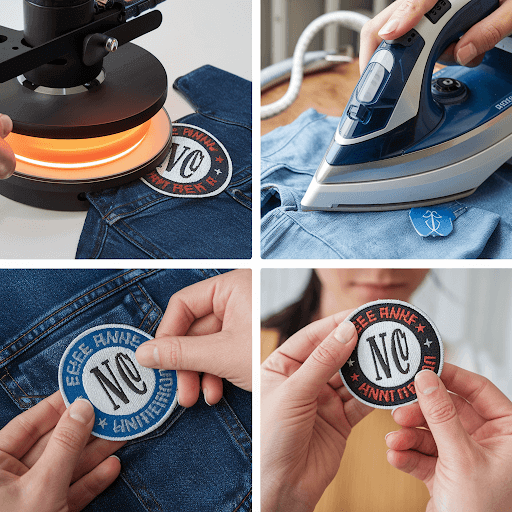
Beyond simple pieces of fabric, custom patches, big and embroidered designs serve the purpose of personalizing clothes, promoting a brand, or making a fashionable statement. Whether you want to express who you are on a denim jacket, show off your business, or even add class to uniforms, knowing the best ways to apply custom patches gives a certainty in both styling and durability.
But how do you attach patches in a way that keeps them secure while maintaining a polished look? From traditional sew-on patches to quick and easy iron-on patches, each method has its own benefits. In this guide, we’ll break down the best techniques to apply custom patches and help you choose the right one for your needs.
1. Sew-On Patches: The Most Durable Option
Why Choose Sew-On Patches?
If you’re looking for long-lasting patches that withstand multiple washes and daily wear, sew-on patches are your best bet. Unlike adhesive-backed patches, custom embroidered patches that are sewn onto fabric remain intact for years without peeling or coming loose.
How to Sew on Patches
- Place the patch on your fabric and secure it with pins.
- Thread a needle or use a sewing machine for a faster application.
- Use small, tight stitches to secure the edges firmly.
- Reinforce the edges by going over them twice for added durability.
Best Fabrics for Sew-On Patches
- Denim jackets
- Leather vests (for custom leather patches)
- Canvas backpacks
- Heavy-duty work uniforms
Pros & Cons of Sew-On Patches
- Extremely durable
- Works well with different patch styles
- Can be used for personalized patches on uniforms
- Requires sewing skills or professional assistance
- Takes more time compared to adhesive methods
2. Iron-On Patches: The Quick & Easy Fix
What Are Iron-On Patches?
Iron-on patches are perfect for those who want a hassle-free way to attach patches without sewing. These patches come with a heat-activated adhesive backing that bonds to the fabric when heat is applied.
How to Apply Iron-On Patches
- Preheat the iron to a medium-high setting (without steam).
- Position the patch where you want it on your clothing.
- Cover the patch with a cloth to prevent direct heat damage.
- Press the iron down firmly for 30-45 seconds.
- Let it cool for a few minutes before checking if it’s secure.
Best Fabrics for Iron-On Patches
- Cotton t-shirts
- Polyester jackets
- Canvas bags
Pros & Cons of Iron-On Patches
- Super easy to apply—no sewing needed
- Great for personalized iron-on patches
- Can be used on multiple fabrics
- Less durable than sew-on patches
- Not suitable for waterproof or coated fabrics
Related guide: How To Add Velcro To A Patch Using The Easiest Methods & Best Glues
3. Heat Press Application: A Professional Alternative
Why Use a Heat Press for Custom Patches?
A heat press machine is an advanced alternative to ironing, ideal for businesses or individuals applying multiple patches. It provides even pressure and heat, ensuring a strong bond between the custom patch and fabric.
How to Apply Custom Patches with a Heat Press
- Set the heat press to 350°F-375°F.
- Place the patch on the garment.
- Press down with firm pressure for 15-20 seconds.
- Allow the fabric to cool before handling.
Best Fabrics for Heat Press Patches
- Cotton and polyester uniforms
- Sportswear
- Custom-designed jackets
Pros & Cons of Heat Press Application
- Ensures long-lasting adhesion
- Provides a smooth, professional finish
- Ideal for bulk applications
- Requires a heat press machine
- Not suitable for heat-sensitive fabrics
4. Fabric Glue: A No-Sew Solution
What Is Fabric Glue for Patches?
If you want a temporary patch application, fabric glue is a quick and easy alternative. This method is ideal for events or costumes where you only need the patch to stay in place for a short period.
How to Apply Custom Patches with Fabric Glue
- Apply fabric glue to the back of the patch.
- Press the patch firmly onto the fabric.
- Let it dry for at least 24 hours before wearing.
Best Fabrics for Glue Patches
- Cotton t-shirts
- Temporary event apparel
Pros & Cons of Fabric Glue Application
- Easy and fast to apply
- Great for custom patches no minimum orders
- Not durable for long-term use
- Can stain delicate fabrics

5. Velcro Backing: The Versatile Choice
What Is a Velcro Patch?
For those who need interchangeable patches, Velcro backing is an excellent option. It allows you to swap out patches on jackets, uniforms, or tactical gear without permanent application.
How to Attach Velcro Patches
- Sew or heat press the soft Velcro strip onto the fabric.
- Attach the hook-side Velcro backing to your patch.
- Press the patch onto the fabric for a secure hold.
Best Uses for Velcro Patches
- Military uniforms
- Sports jerseys
- Tactical gear
Pros & Cons of Velcro Patches
- Reusable and interchangeable
- No damage to fabric
- Ideal for team uniforms and tactical use
- Requires initial Velcro attachment
- May lose grip over time
6. Appliqué Embroidery: A Professional Touch
What Is Appliqué Embroidery?
Appliqué embroidery is an advanced technique where a custom embroidered patch is stitched onto fabric using an embroidery machine. This method is widely used in sportswear and corporate branding, giving a seamless and professional finish.
How to Apply Custom Patches with Appliqué Embroidery
- Position the patch on the fabric using a light adhesive spray.
- Use an embroidery machine to stitch around the edges securely.
- Trim any excess fabric for a clean, professional look.
Best Fabrics for Appliqué Patches
- Sports jerseys
- Work uniforms
- Performance wear
Pros & Cons of Appliqué Embroidery
- Extremely durable
- Looks like part of the fabric
- Ideal for professional branding
- Requires specialized embroidery equipment
- Not DIY-friendly
7. Stitch & Heat Seal: A Hybrid Solution
Why Combine Stitching and Heat Sealing?
For maximum durability and a premium-quality finish, you can use a combination of heat seal backing and stitching. This ensures the patch stays in place while reinforcing it for long-term wear.
How to Apply Custom Patches with Stitch & Heat Seal
- Use a heat press to attach the patch securely.
- Sew around the edges for added reinforcement.
Best Fabrics for Stitch & Heat Seal Patches
- Heavy-duty work uniforms
- Military gear
- Leather jackets
Pros & Cons of Stitch & Heat Seal
- Longest-lasting method
- Ideal for custom leather patches and thick fabrics
- Resistant to peeling and fraying
- Requires both sewing and heat pressing
- Time-consuming
Quick & Easy Guide: How to Remove a Sewn-On Patch from Your Clothes
Choosing the Right Method to Apply Custom Patches
When selecting the best technique to apply custom patches, consider:
Fabric Type – Some fabrics, like nylon and leather, require special application methods.
Durability Needs – Sew-on patches and stitch & heat seal methods last the longest.
Convenience – Iron-on patches and fabric glue are great for quick applications.
Professional Finish – Appliqué embroidery and heat press application give the best seamless look.
Customization – Velcro patches allow for easy removal and replacement.
No matter your needs, there’s a custom patch application technique that will work for you!
Get High-Quality Custom Patches from Patch Makers USA
Now that you know the best techniques to apply custom patches, it’s time to create your own! At Patch Makers USA, we offer a wide range of custom patches including custom embroidered patches, custom chenille patches, custom leather patches, custom PVC patches, and custom woven patches—all available with multiple backing options to suit your application needs.
Ready to upgrade your clothing, uniforms, or accessories with unique patches? Order your custom patches today from Patch Makers USA and bring your designs to life!