
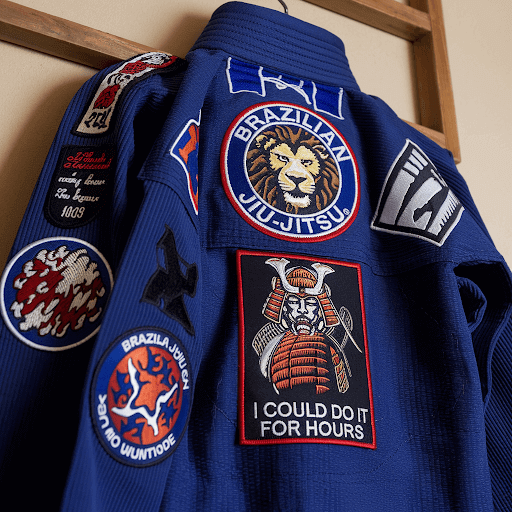
Brazilian Jiu-Jitsu (BJJ) is beyond sport—it’s a lifestyle, a brotherhood, and a journey of self-improvement. And what better way to showcase your dedication, lineage, and personal style than with BJJ patches? Whether you’re representing your academy, flaunting your belt rank, or just adding some personality to your BJJ gi, patches are an essential part of the Jiu-Jitsu culture.
But with so many custom BJJ patches available—embroidered, woven, sublimated, PVC, and more—it can be overwhelming to decide which one suits you best. Plus, knowing the correct BJJ gi patch placement is crucial to ensure compliance with competition rules like IBJJF while keeping your uniform stylish and functional.
In this guide, we’ll break down the best BJJ patches, different patch styles, and the right way to apply them to your gi. Whether you’re looking for custom gi patches, funny BJJ patches, or traditional Brazilian Jiu-Jitsu patches, we’ve got you covered!
Best BJJ Patches for Gi: What Are Your Options?
When it comes to patches for BJJ gi, the choices are endless. From academy logos to sponsor badges, every patch tells a story. Below are the most popular types of custom BJJ patches you can get for your gi:
1. Custom Embroidered Patches
Embroidered patches are the classic choice for BJJ gi patches. They feature raised, textured stitching that gives them a bold, premium look. These are great for team logos, belt rank symbols, or high-impact designs that need to stand out.
Pros:
- Highly durable and long-lasting
- Textured and professional look
- Great for bold logos and traditional designs
Cons:
- Not ideal for small, intricate details
- Slightly heavier than woven patches
2. Custom Woven Patches
For those who prefer a smoother, more detailed design, custom woven patches are the way to go. Unlike embroidery, woven patches use thinner threads, allowing for more intricate designs without the raised texture.
Pros:
- Perfect for complex designs and fine details
- Lightweight and flexible
- Sleek, modern look
Cons:
- Not as textured as embroidered patches
- May fray over time if not sewn properly
3. Custom PVC Patches
Looking for something unique and long-lasting? Custom PVC patches are made from rubber-like material, making them waterproof and ultra-durable—perfect for BJJ patches for gi that need to withstand heavy training sessions.
Pros:
- Waterproof and weather-resistant
- Vibrant colors that won’t fade
- Ideal for outdoor and hardcore training gear
Cons:
- Not as traditional as embroidered or woven patches
- Slightly heavier than fabric patches
4. Custom Sublimated Patches
Sublimated patches (also known as printed patches) allow for full-color, photorealistic designs patches. These are great for vibrant graphics, detailed artwork, or patches with gradients.
Pros:
- Unlimited color options and sharp details
- No thread limitations like embroidery
- Lightweight and flexible
Cons:
- Not as textured as embroidered patches
- May fade over time with frequent washing
Might catch your gaze: Celebrate Your Love Uniquely with Custom Wedding Patches
5. Custom Chenille Patches
If you’re looking for a vintage or soft-touch design, custom chenille patches are a fantastic option. These fuzzy, textured patches are great for team logos or personalized BJJ patches that make a bold statement.
Pros:
- Soft, textured, and unique appearance
- Great for bold, large designs
- Retro and stylish
Cons:
- Not ideal for small, intricate details
- Slightly bulky compared to other patch types
6. Custom Leather Patches
For a rugged, high-end look, custom leather patches are an excellent choice. Whether it’s genuine or faux leather, these patches give off a premium vibe and are perfect for unique personalized clothing patches.
Pros:
- Luxurious and unique appearance
- Extremely durable
- Perfect for limited-edition or high-end gis
Cons:
- Not as colorful as other patch types
- Requires special stitching for secure attachment
7. Custom Applique & Sequin Patches
For those who love to stand out, custom applique and custom sequin patches bring an extra flair to your BJJ gi patches. These are often used for fashion statements rather than competition gis.
Pros:
- Unique and eye-catching
- Great for personal expression
- Lightweight and flexible
Cons:
- Not ideal for rigorous training gis
- Less durable than other patch styles

BJJ Gi Patch Placement: Where to Put Your Jiu-Jitsu Patches?
Knowing where to place Jiu-Jitsu patches is just as important as picking the right patch. Some academies and tournaments have strict guidelines, so it’s essential to follow proper BJJ patch etiquette.
1. Shoulders
One of the most common BJJ gi patch placements, shoulder patches typically display academy logos, sponsorships, or custom team designs.
- Best for: Academy logos, team patches, or personal branding
- IBJJF Rule: Allowed on both shoulders
2. Chest
Chest patches are great for small custom BJJ patches that highlight your school’s name or your rank.
- Best for: Academy logos, belt rank patches
- IBJJF Rule: Allowed, but must not interfere with the gi closure
3. Back
A BJJ back patch is usually large and features a bold academy logo or a personal design.
- Best for: Large academy logos, team names, personal branding
- IBJJF Rule: Must be placed below the collar and above the belt
4. Lapels
Lapels are a less common but stylish area for BJJ patches. They can add a subtle touch to your gi.
- Best for: Personalized iron-on patches, name patches
- IBJJF Rule: Typically allowed but not preferred in competitions
5. Pants & Legs
Some practitioners place BJJ patches for gi pants on the thigh or shin area for additional branding.
- Best for: Fun or funny BJJ patches, custom designs
- IBJJF Rule: Must not interfere with movement
BJJ Patches Etiquette: Dos and Don’ts
- DO: Follow your academy’s uniform guidelines
- DO: Use high-quality custom embroidered patches or woven patches for durability
- DO: Make sure your BJJ patches for gi are securely stitched
- DON’T: Place patches in areas that interfere with grip fighting
- DON’T: Use offensive or disrespectful designs
How to Apply BJJ Patches to Your Gi
Now that you’ve picked the perfect BJJ patches, it’s time to attach them to your gi. There are several ways to apply custom gi patches, and each method has its pros and cons.
1. Sewing Your Patches (Most Durable Method)
Sewing is the traditional and most durable way to attach custom BJJ patches to your gi. This method ensures that patches stay secure even after multiple washes and intense training sessions.
Steps to Sew a Patch on a Gi:
- Place the patch on your gi and secure it with pins.
- Use a strong needle and thread that matches the patch color.
- Stitch around the edges, ensuring it’s firmly attached.
- Reinforce the stitching at the corners for extra durability.
Best for: Long-term patch placement, BJJ gi patch placement compliance
Downside: Time-consuming, requires sewing skills
2. Iron-On Patches (Quick & Easy)
Iron-on Jiu-Jitsu patches are convenient for those who want a fast and simple way to apply patches. However, they may not be as durable as sewn patches.
Steps to Iron a Patch on a Gi:
- Set your iron to medium heat (without steam).
- Place the patch on the gi in the desired location.
- Cover it with a thin cloth and press the iron for 30-60 seconds.
- Let it cool before wearing or washing.
Best for: Temporary patching, personalized iron-on patches
Downside: May peel off over time, not ideal for heavy training gis
3. Velcro Patches (Versatile & Removable)
Velcro patches allow you to switch out patches whenever you want. This is great for practitioners who need different patches for competitions and training.
Steps to Apply Velcro Patches:
- Sew one side of the Velcro strip onto your gi.
- Attach the Velcro-backed patch to it.
- Remove or swap out patches as needed.
Best for: Customizable gi designs, custom BJJ patches
Downside: Requires some sewing, may weaken over time
Top read this week: All You Need to Know About Custom Scout Patches
How to Remove Patches from Your BJJ Gi
Whether you’re replacing an old patch or complying with a new gym’s BJJ patches etiquette, removing patches properly ensures that your gi stays in great condition.
Removing Sewn Patches
- Use a seam ripper or small scissors to cut the stitches.
- Carefully pull the thread out without damaging the fabric.
- Clean any loose threads or residue.
Removing Iron-On Patches
- Set your iron to a low heat setting.
- Gently heat the patch until the adhesive loosens.
- Peel off the patch slowly.
- Use fabric adhesive remover to clean up residue.
Removing Velcro Patches
Simply detach the Velcro-backed patch and replace it with another one. If you want to remove the Velcro strip itself, you will need to carefully unstitch it.
Upgrade Your Gi with the Best BJJ Patches!
At Patch Makers USA, we create high-quality, custom BJJ patches that blend durability, style, and precision. No matter your design, we can bring it to life with embroidered, woven, PVC, leather, or sublimated patches that reflect your personality and team spirit.
Ready to customize your gi? Order your BJJ patches today and take your Jiu-Jitsu game to the next level!